


As fuel costs rise and contractors look for lower-cost operating solutions, oil-to-electric excavator conversion is attracting increasing attention. Among the most common approaches is the tethered electric power system, which offers relatively low conversion costs and a short payback period.
However, tethered systems generally follow two different power-supply layouts: overhead-fed power and ground-fed power.
The names may sound similar, but their suitable applications are very different. The right choice depends mainly on working radius, machine size, cable routing, and site conditions.
Scenario 1: Why Overhead-Fed Power Works Better in Scrap Yards
Consider a scrap-metal recycling yard operating two 20-ton excavators. The machines mainly stay within a fixed working area, handling scrap and loading trucks.
In this type of application, an overhead-fed power system is often the better solution.
Suitable for Fixed Working Areas
Overhead-fed systems generally provide a working radius of around 50 meters, which is sufficient for many fixed-site operations.
For scrap yards, where machines rarely need to travel long distances, this range is usually enough for normal loading and material-handling work.
Keeps Cables Off the Ground
Another major advantage is cable management.
Scrap yards often have trucks and other equipment moving continuously through the work area. If power cables are dragged across the ground, they can obstruct traffic and create additional safety risks.
With an overhead-fed system, the cable is routed above the excavator boom, keeping the ground clear and reducing interference with vehicle movement.
Lower Conversion Cost
Overhead-fed power is also one of the simplest tethered conversion solutions.
Because it does not require a large traction battery, the initial investment is relatively low. Once converted, the machine can connect directly to the power supply and begin operation.
As long as grid power is available, the excavator can operate continuously, making the system suitable for intensive operations and even 24-hour shifts.
For fixed applications such as scrap yards, ports, steel mills, and demolition facilities, overhead-fed power can provide a practical and economical solution.
Scenario 2: Ground-Fed Power for Large Open-Pit Mines
Large open-pit mines present a very different operating environment.
Mining excavators are often 50 to 100 tonnes or more, and their working areas are significantly larger. In these applications, a ground-fed power system is generally more suitable.
Better for Large Excavators
Large machines require higher motor power and significantly higher current.
As a result, the power cable becomes much thicker and heavier. Routing such cables over the boom can restrict movement and complicate machine operation.
A ground-fed system allows heavy-duty cables to enter from ground level, simplifying cable routing and reducing interference with boom and swing movements.
The larger the excavator, the greater the practical advantage of ground-fed power.
Much Longer Power-Supply Distance
Working distance is another major difference.
While overhead-fed systems generally support around 50 meters of operating radius, ground-fed systems can be equipped with automatic cable reels, extending the power-supply distance to several kilometers.
This makes them better suited to large mines, quarries, and other jobsites where machines need to move across a much wider operating area.
How to Choose: Three Key Questions
Selecting the right system becomes much easier if you focus on three practical factors.
1. How Large Is Your Working Radius?
If the excavator operates mainly in one fixed location and a 50-meter radius is sufficient, overhead-fed power is usually the simpler and more economical option.
If the machine needs to work across a large site and requires power delivery over hundreds of meters or several kilometers, ground-fed power should be considered.
2. What Size Is the Excavator?
For excavators below approximately 50 tonnes, overhead-fed systems can generally meet cable and power requirements.
For machines above 50 tonnes, cable diameter and weight increase significantly. In these applications, ground-fed systems are usually easier to install and operate.
3. How Busy Is Ground Traffic?
If trucks and other machines frequently pass through the working area, overhead-fed power has a clear advantage because the cable remains off the ground.
If the jobsite is open and ground traffic is limited, a ground-fed cable system can operate effectively.
The Payback Period Also Matters
Selecting the correct technical solution is only part of the decision. Contractors also need to calculate how quickly the conversion investment can be recovered.
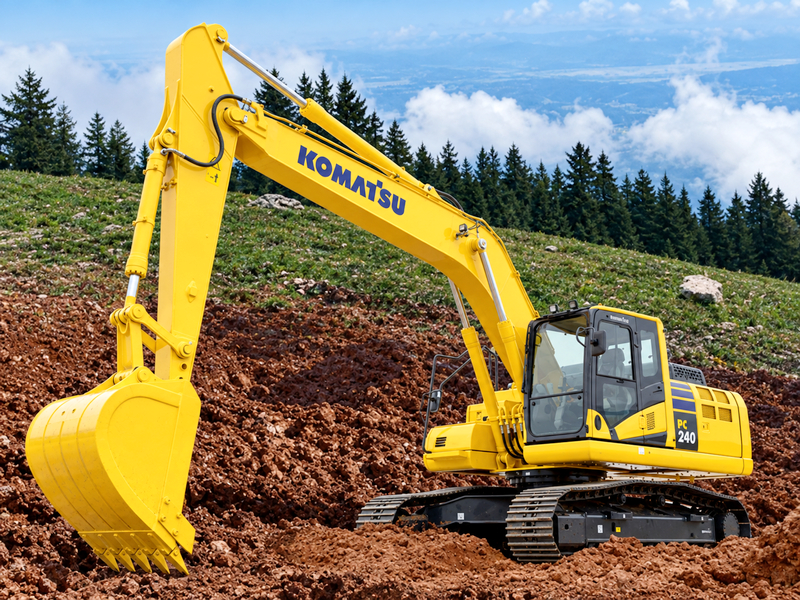
Take a Komatsu PC200 excavator as an example.
A diesel-powered machine may consume approximately RMB 110 per hour in fuel costs. After conversion to a tethered electric system, hourly electricity costs can fall to around RMB 35.
That represents savings of more than RMB 70 per operating hour.
At that rate, the conversion investment could potentially be recovered after approximately 3,200–3,300 operating hours.
If the machine works eight hours per day, the payback period would be roughly 400 working days, or slightly more than one year. Machines with higher utilization or double-shift operation could recover the investment even faster.
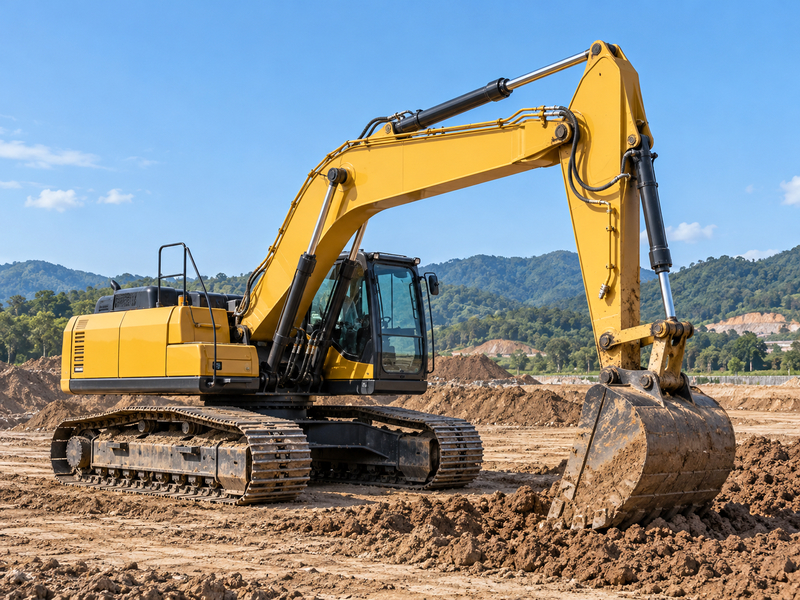
Which System Is Right for You?
There is no universally better solution between overhead-fed and ground-fed power. The key is matching the system to the actual application.
For fixed jobsites, medium and small excavators, and working radii within 50 meters, overhead-fed power offers a simple and cost-effective solution.
For large mines, heavy excavators, and wide operating areas, ground-fed power provides greater flexibility and longer power-supply distance.
Choosing the right system can significantly reduce energy costs and improve the economics of oil-to-electric conversion. For machine owners considering electrification, working with an experienced conversion provider is also critical to ensure safe installation, reliable operation, and long-term performance.


 +86-21-6182-0338
 +86-21-6182-0338
 +86-135-7794-9888
 sales@stsaber.com
 Suite 5502, Shanghai Tower, No. 501 Yincheng Middle Road, Pudong New Area, Shanghai 200120, China


