


From September 14 to 20, IAA Transportation 2026 was held in Hannover, Germany, bringing together leading companies from the global commercial vehicle industry.
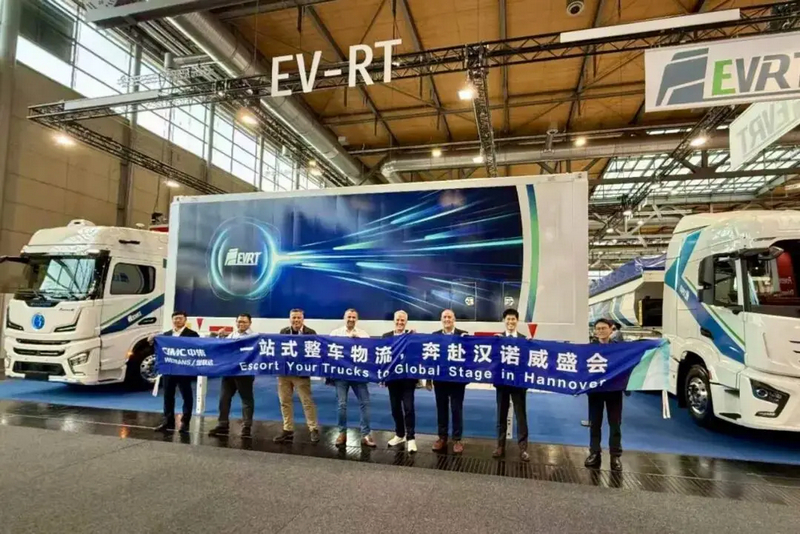
CIMC Vehicles, which has ranked first globally in semi-trailer production and sales for 13 consecutive years, showcased its EV-RT battery-electric tractor-trailer platform and related ecosystem products at Hall 27, Booth C06. The company introduced a range of green transportation solutions for both engineering and logistics applications.
Cross-border transportation of the exhibition vehicles and equipment was handled by CIMC Multimodal Transport, a subsidiary of CIMC WorldWide Logistics.
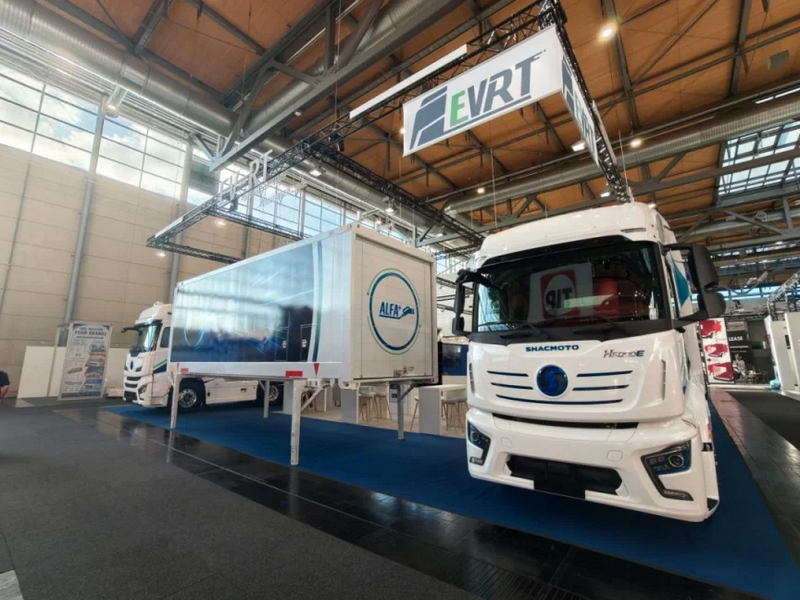
EV-RT Platforms Target Logistics and Engineering Applications
IAA Transportation is one of the world’s most influential commercial vehicle exhibitions, with a history spanning more than a century.
At this year’s event, CIMC Vehicles presented complete vehicle platforms for engineering and logistics applications, integrated tractor-trailer control technologies, and modular mobile charging solutions.
Together, these products form an integrated ecosystem covering vehicles, energy replenishment, and fleet operation, providing a systematic solution for the electrification of road freight transport.
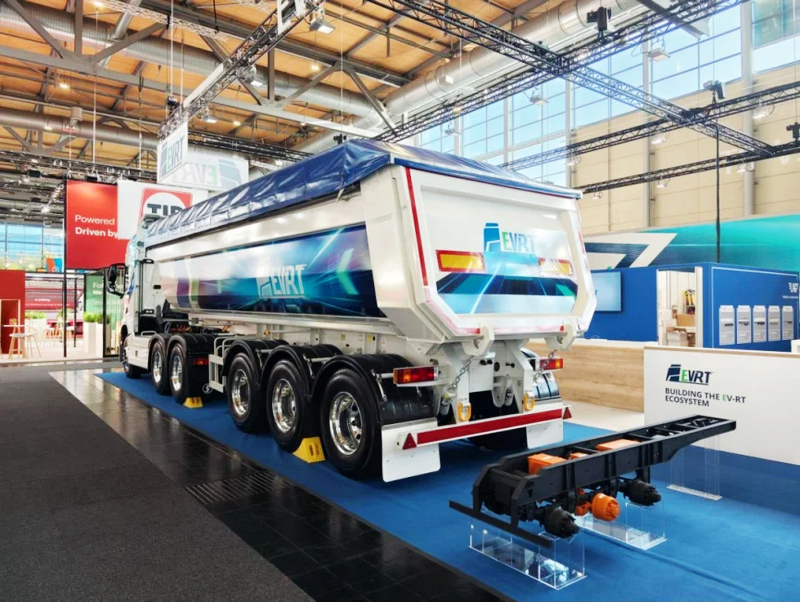
Under the EV-RT architecture, CIMC Vehicles introduced two major platforms:
- A long platform designed for trunk logistics
- A short platform designed for heavy-duty engineering applications
The two platforms are intended to address different operating requirements while sharing an integrated electrified architecture.
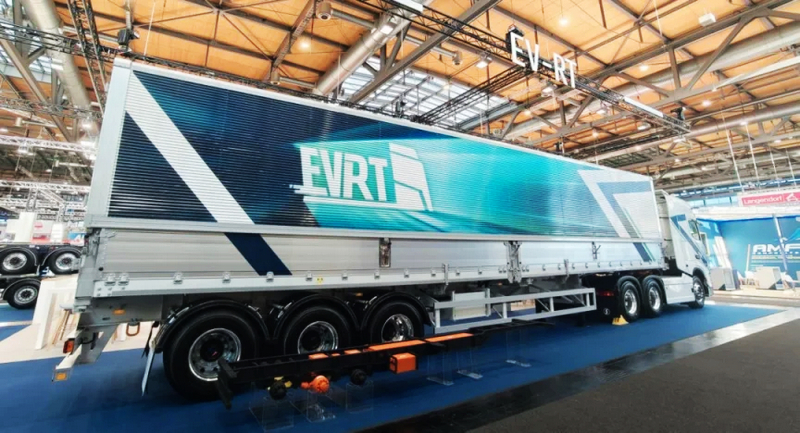
Electric Logistics Platform Makes Global Debut
The logistics-oriented EV-RT platform made its global debut in Hannover.
Designed for long-distance freight transport, the platform focuses on extended range and efficient fleet utilization.
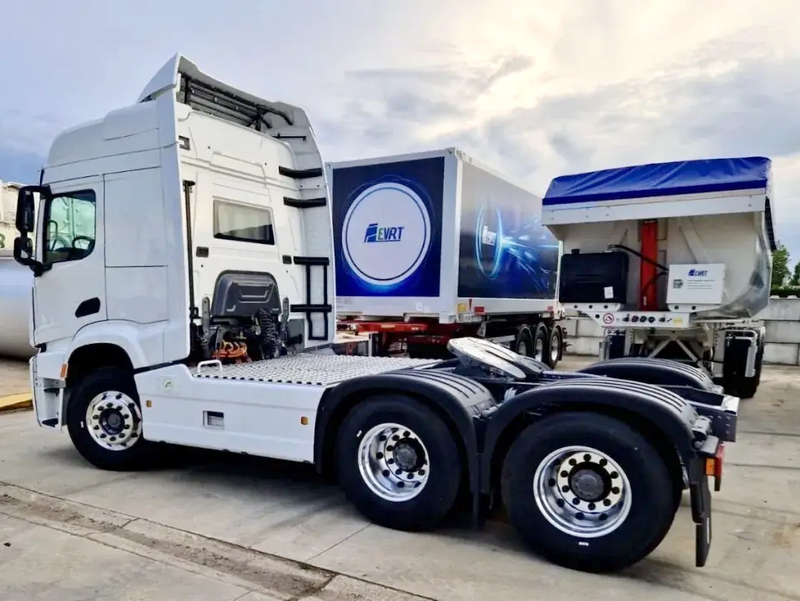
The first model is a battery-electric tractor-trailer with a wing-opening box body. It uses a lightweight aluminum-alloy cargo compartment, while the trailer can be equipped with battery packs ranging from 100 kWh to 400 kWh.
Fleet operators can therefore select battery capacity according to route length and operating requirements.
The wing-opening body can be electrically opened at the touch of a button, helping improve loading and unloading efficiency and reduce vehicle turnaround time.
Electric Engineering Platform Delivers Heavy-Duty Performance
For demanding construction and engineering environments, CIMC Vehicles presented an electric tractor-trailer dump truck designed around four key advantages: strong power, high safety, low energy consumption, and reduced labor requirements.
After a full year of validation, the vehicle demonstrated several key performance improvements.
Its coordinated tractor-trailer drive system increases total vehicle power performance by approximately 15%–20%.
Even at a gross weight of 49 tonnes, the vehicle can reportedly climb gradients of up to 30%.
Additional performance figures include:
- Braking distance more than 20% shorter than the applicable national standard
- Around 30% higher energy recovery capability during heavy-load downhill operation
- Electric tarpaulin system with one-touch opening and closing
The electric tarpaulin eliminates the need for drivers to climb onto the cargo body to manually cover loads, improving both safety and operating efficiency.
Mobile Charging Solution Supports Flexible Deployment
Charging infrastructure remains one of the major constraints on long-distance electric commercial vehicle operation.
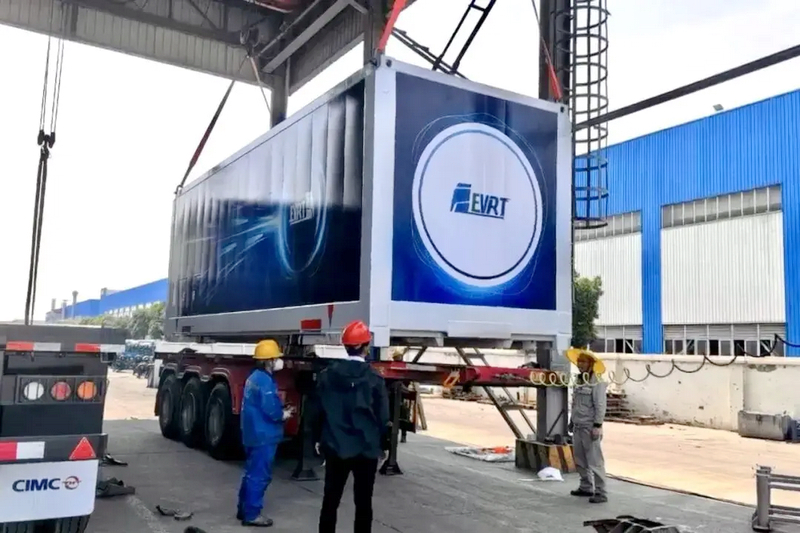
To address this issue, CIMC Vehicles also displayed the EV-RT ALFA-B mobile energy replenishment module.
The system uses a modular design and can be flexibly deployed without requiring permanent charging infrastructure.
Its main features include:
- Modular containerized design
- Flexible placement and relocation
- Distributed energy storage
- Configurable battery capacity
- Flexible charging and discharging
- Reduced dependence on fixed grid infrastructure
A single module can support the charging requirements of approximately three to six electric heavy trucks.
The system comes standard with 800V ultra-fast charging and can support charging power of up to 1 MW.
This mobile approach can help reduce land and infrastructure constraints while improving charging flexibility for logistics hubs, construction sites, and temporary operating locations.
Three-Month Cross-Border Logistics Operation
Ensuring that the exhibition vehicles arrived in Hannover on schedule required extensive planning and coordination.
The project involved eight vehicles and related pieces of equipment, shipped from Taicang Port in China by roll-on/roll-off vessel to Belgium before being transported by road to the exhibition site in Hannover.
The entire transport and coordination process lasted approximately three months.
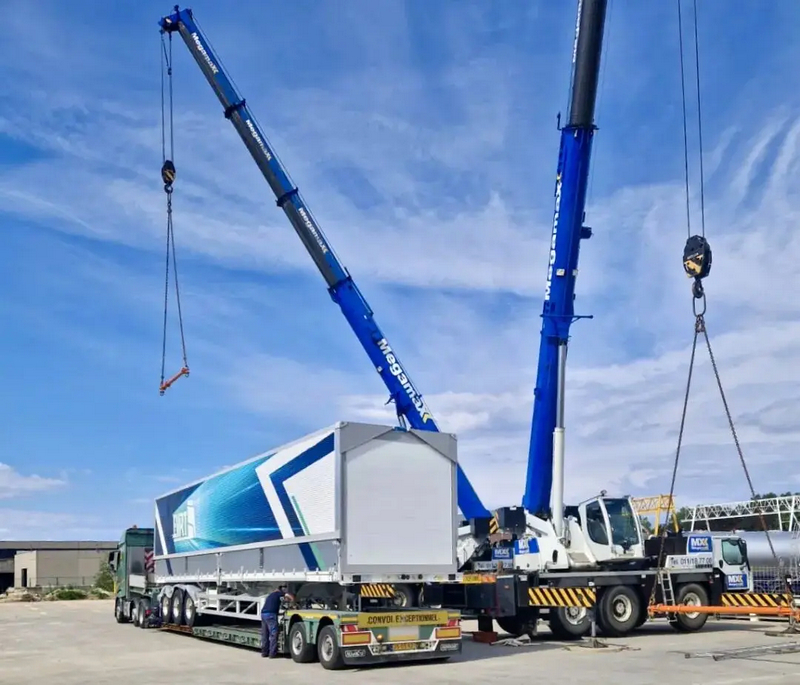
The cargo included oversized and heavy equipment with challenging dimensions. The largest individual shipment weighed up to 12 tonnes and exceeded 147 cubic meters in volume.
Special arrangements were therefore required for:
- RoRo loading
- Port lifting operations
- Cargo securing and lashing
- Oversized road transport
- Exhibition-site delivery
Complex Coordination Across Sea and Land
The project required precise coordination between maritime and road transport operations.
After arrival in Europe, unloading, transshipment, customs clearance, road transportation, and exhibition-site acceptance all had to be aligned with the exhibition setup schedule.
Any delay at one stage could have affected both cargo safety and final delivery.
The project also involved multiple parties, including:
- Shipping companies
- Customs authorities
- Overseas agents
- Trucking companies
- Exhibition organizers
Teams had to overcome time-zone and language differences while maintaining real-time communication throughout the operation.
ATA Carnet Supports Temporary Import and Re-Export
The exhibition equipment entered Europe under an ATA Carnet, allowing temporary importation for exhibition purposes.
Because the equipment must later be returned to China in its original condition, customs procedures had to be coordinated closely with transportation schedules.
The project team secured shipping capacity in advance, incorporated oversized-cargo requirements into the logistics plan, and coordinated RoRo loading, port operations, inland transportation, and exhibition delivery.
Throughout the journey, the team continuously monitored key milestones including arrival, customs clearance, inland transfer, and exhibition-site acceptance.
This integrated approach helped reduce handover risks and ensure that the exhibits arrived in Hannover as scheduled.
Collaboration Across CIMC Business Units
The project highlights the cooperation between two business units under CIMC Group.
CIMC Vehicles provided advanced new energy commercial vehicle products and transport solutions, while CIMC WorldWide Logistics contributed cross-border project logistics expertise.
Going forward, CIMC Vehicles will continue developing new energy commercial vehicles and supporting technologies while expanding its international presence.
CIMC WorldWide Logistics will further strengthen its capabilities in oversized cargo transportation, cross-border project logistics, schedule coordination, and international multimodal operations.
Together, the two businesses aim to support more Chinese-manufactured products entering global markets with safe, efficient, and reliable logistics services.


 +86-21-6182-0338
 +86-21-6182-0338
 +86-135-7794-9888
 sales@stsaber.com
 Suite 5502, Shanghai Tower, No. 501 Yincheng Middle Road, Pudong New Area, Shanghai 200120, China


